
Mavela Game Lodge is nestled in the heart of the magnificent Big 5 Manyoni Private Game Reserve, near Mkuze in KwaZulu‑Natal, South Africa.
This all‑inclusive, safari‑style tented lodge offers local and international travellers an intimate escape into the African wilderness.
Mavela is founded on a deep commitment to conservation and a genuine passion for protecting wildlife for generations to come. Over the years, it has been incredibly rewarding to see the lodge become a beloved return destination for guests seeking authentic wildlife encounters and unforgettable Big 5 sightings—lion, leopard, buffalo, elephant, and rhino.
Yet the experience extends far beyond the Big 5.
Manyoni plays a vital role in safeguarding some of Africa’s most endangered and vulnerable species, including Temminck’s pangolin, black rhino, and cheetah. Knowing that your visit contributes to these conservation efforts makes your safari not only remarkable, but truly meaningful.
Owned and operated by us—the Stevens family—Mavela reflects our deep connection to this land. Having spent countless hours exploring the reserve, and as passionate birders ourselves, we know just how extraordinary this region truly is.
Manyoni is a premier birding destination with exceptional game‑viewing opportunities, and we are dedicated to sharing its magic with you. Hospitality comes naturally to us, and with our hands‑on approach, you can expect genuine warmth paired with the highest standard of personal service.
We cannot wait to welcome you to our bush paradise."
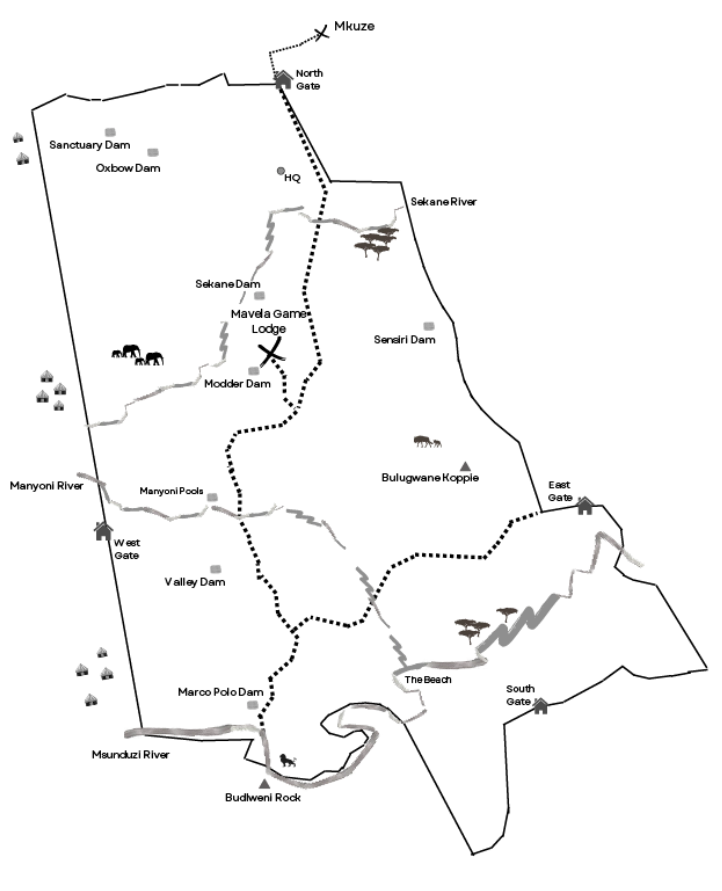
Manyoni Private Game Reserve is one of the largest privately protected reserves in KwaZulu-Natal, spanning 23,500 hectares of diverse Zululand wilderness. Established in 2004 when 17 landowners removed their fences to form a unified conservation area, the reserve was later selected as a release site for the WWF Black Rhino Range Expansion Project, leading to the successful reintroduction of black rhino in 2005. Lions and endangered cheetahs were subsequently reintroduced, restoring Manyoni’s status as a Big 5 reserve.
Today, the reserve is home to over 70 mammal species — including lion, elephant, buffalo, leopard, rhino and cheetah — as well as an extraordinary diversity of reptiles and smaller wildlife. A renowned birding destination, Manyoni boasts more than 420 recorded bird species across its varied habitats. With a strong commitment to conservation, the reserve plays a vital role in protecting some of Africa’s most endangered species, including black rhino, cheetah and pangolin, while preserving the ecosystems that sustain this remarkable biodiversity.
Conservation lies at the heart of life within the Manyoni Private Game Reserve. From endangered species protection to habitat management and community upliftment initiatives, every effort contributes to safeguarding this extraordinary ecosystem. In this space, we share ongoing conservation projects, wildlife milestones, and behind-the-scenes stories that offer deeper insight into the work being done to protect the wild spaces our guests experience.
The Msunduze Valley has long been a haven for wildlife and traditional Zulu (Nguni) cattle. It served as a seasonal grazing ground and a hunting area for the Zulu clans residing outside the valley. Cetshwayo kaMpande, the son of kaMpande and half-brother to Shaka Zulu, ascended to the throne as Zulu King in 1873, following the reign of his father, Dingaan. That same year, Maphitha Zulu, leader of the Mandlakazi section, passed away and was succeeded by his son, Zibhebhu kaMaphitha. After Cetshwayo's capital, Ulundi, was captured and burned, he was exiled to London. In response to the ensuing chaos, the British divided Zululand into 13 districts in 1879. Zibhebhu was appointed as one of the 13 independent chiefs and was given the Mandlakazi district. His kraal was located near the current boundaries of the Manyoni Private Game Reserve, further upstream on the Msunduzi River. Following his restoration in 1883, all Zulu people north of the Umhlatuzi River were returned to Cetshwayo's authority, except for the Mandlakazi section, which remained under Zibhebhu’s control. This soon led to tribal wars between the Mandlakazi tribe and Cetshwayo's followers. On July 21, 1883, Zibhebhu’s forces set fire to Cetshwayo's kraal in Ulundi, prompting Cetshwayo's flight, which ultimately resulted in his death on February 8, 1884. Dinizulu, Cetshwayo's son, fought for the throne and, with General Louis Botha's assistance, defeated Zibhebhu and his army at the Battle of Ghost Mountain. The Boers seized cattle and a significant portion of the fertile land in Zululand, which the Usutu opposed. The British Government intervened, confirming the land acquisition by the Boers, while the remainder of Zululand was annexed by the British in 1884.
Sign up to our newsletter to receive our latest news about offers & promotions.
Cancellations and Changes: We understand that travel plans can change. To support our guests, we offer flexible date changes and a clear refund structure. Please note that this policy applies consistently in all circumstances, including force majeure events beyond our control.
New dates are subject to availability and the rates applicable to the new travel period. We will honour the original quoted rate for any postponement rebooked within 6 months, subject to availability and excluding peak periods. Only one date change is permitted.
Refunds are issued less any credit card processing fees, and the final refund amount may vary slightly due to currency exchange rate fluctuations.
